


Treatments
Revision Knee Replacement
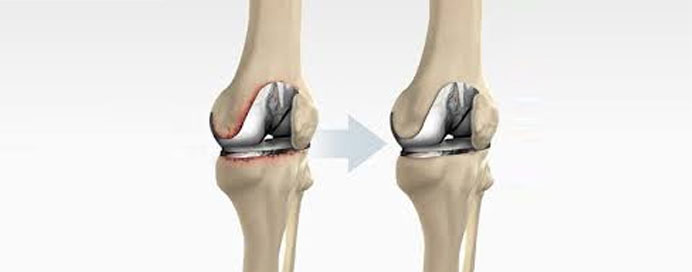
Revision Knee Replacement is a surgical procedure performed to replace or repair a previously implanted knee prosthesis that has failed or worn out over time. It is usually required when the initial knee replacement results in pain, instability, infection, loosening of the implant, or mechanical failure. Revision surgery is more complex than primary knee replacement because it involves removing the old implant, addressing bone loss, and placing a new prosthesis to restore stability, function, and alignment of the knee.
- Indicated for implant loosening, wear, infection, or persistent pain after primary knee replacement.
- Involves removal of the old knee prosthesis and preparation of bone for a new implant.
- May require specialized implants or bone grafts depending on bone loss and joint stability.
- Surgery is more complex and typically takes longer than a primary knee replacement.
- Pain relief and improved knee function are the main goals of revision surgery.
- Post-operative physiotherapy is crucial for regaining mobility and strength.
- Recovery may take longer than primary knee replacement, often several months.
- Long-term success depends on proper implant selection, surgical technique, and patient compliance with rehabilitation.